

Preparation • Presence • Integration
This retreat is offered to a small group of women who feel called to explore psychedelic work slowly, relationally, and with care for the nervous system.
Rather than focusing on peak experiences, this program emphasizes preparation, pacing, and integration — so that whatever unfolds under medicine can be met with choice, support, and meaning.
To support the integrity of this container, participation is limited to those who have engaged in TIMBo or have been personally referred by someone who has. This ensures a shared foundation and allows the work to unfold in a way that is both intimate and deeply supported.
This is a three-part journey.
Why a Group Psychedelic Retreat?
Individual psychedelic journeys can be deeply meaningful. They offer privacy, focus, and the opportunity to explore one’s inner world without distraction. For some people and at certain times, this is exactly what’s needed.
A group retreat offers something different.
Human nervous systems are shaped in relationship — and they heal in relationship. When psychedelic work happens within a carefully prepared group container, the medicine doesn’t just interact with the individual psyche; it interacts with connection, resonance, and shared humanity.
In a trauma-informed group retreat, you are not alone with your experience. You are held within a field of shared intention, care, and pacing.
What a Group Container Makes Possible
Regulation through connection
Simply being in the presence of others who are grounded and attuned can support the nervous system in settling. Under medicine, this co-regulation becomes even more potent. Many participants find that their bodies soften not because they are “doing” anything, but because they are not alone.
Relief from isolation
Trauma often teaches us that we must carry our experiences by ourselves. In a group setting, participants often discover — sometimes quietly, sometimes profoundly — that others carry similar fears, longings, and patterns. This recognition can ease shame and create a felt sense of belonging.
Witnessing without fixing
Group retreats offer the experience of being seen without being analyzed or rescued. This kind of witnessing can be deeply reparative, especially for those whose experiences were minimized or misunderstood in the past.
Learning through resonance
Hearing others name sensations, emotions, or insights can help articulate what might otherwise remain wordless. The group becomes a mirror, offering language and possibility without comparison or pressure.
How This Differs from Individual Medicine Work
Individual journeys tend to be highly internal and self-referential. Group retreats add an interpersonal dimension that can:
-
illuminate relational patterns as they arise
-
soften protective strategies around closeness
-
support integration through shared reflection
-
strengthen trust in both self and others
Rather than replacing individual work, group retreats expand the context in which healing happens
Why Preparation Matters Even More in a Group
Because group work can be powerful, it also requires care.
This is why our retreats include extensive preparation. When participants arrive already familiar with pacing, consent, and nervous-system awareness, the group becomes a resource rather than a stressor. The result is a container that supports depth without overwhelm.
What Participants Often Take With Them
Many participants leave group retreats with:
-
a renewed sense of connection to themselves
-
a felt experience of belonging that extends beyond the retreat
-
greater trust in relationships
-
and the understanding that healing does not have to happen alone
In this way, the group itself becomes part of the medicine — not something to manage, but something that supports and amplifies integration.
Why a Women-Only Retreat?

This retreat is intentionally offered as a women-only space to support a particular kind of nervous-system settling and relational ease.
For many women, the body organizes differently (often subtly) in mixed-gender environments and sometimes outside of conscious awareness. There can be a quiet monitoring of how one is perceived, how much space is being taken, or how to stay safe in ways that are deeply learned and long-held.
In a women-only setting, many of these patterns can begin to soften.
This understanding is informed by nearly two decades of experience developing and facilitating trauma-informed, gender-responsive programs, where the conditions of safety, relational attunement, and shared lived experience play a significant role in how deeply participants are able to access their inner world.
Without needing to orient to male presence, the nervous system often has more room to:
-
settle and rest
-
turn inward
-
feel without interruption
-
take up space more naturally
This can create a sense of familiarity and resonance that supports deeper inner work.
Relational Safety and Shared Experience
There is also something powerful in gathering with others who may carry similar lived experiences — around identity, conditioning, relationships, and the body.
This does not mean all experiences are the same. But for many women, being in a women-only group can offer:
-
a reduction in social vigilance
-
a greater ease in emotional expression
-
a felt sense of being understood without needing to explain
A Gentle Clarification
This choice is not about exclusion, but about creating a trauma informed and gender responsive container for women.
Select button below to see a small sample study summary of an all women psychedelic retreat.
11 week Retreat Structure

Preparation
6 Weeks of Grounding and Resourcing (Required)
Before we ever gather in person, participants commit to a 6-week online preparation process grounded in the Trauma-Informed Mind-Body (TIMBo) framework.
This preparation is an essential part of the retreat.
Psychedelic work tends to amplify whatever is already present in the nervous system. States of curiosity, openness, and trust can deepen — and so can patterns of bracing, fear, dissociation, or self-abandonment. Because of this, our primary focus in preparation is not insight, but capacity.
Over six weekly TIMBo sessions, we work together to:
-
build internal and relational resources
-
learn how to recognize early signs of activation
-
practice coming back from intensity rather than pushing through it
-
understand protective patterns with compassion
-
develop shared language, pacing, and consent
-
begin forming trust and safety within the group
This stage allows the body to learn something new before the medicine experience:
“I can feel intensity and still stay connected to myself.”
By the time we arrive at the retreat, the group is no longer a collection of individuals — it is a resourced, familiar, and relational field.


The Retreat: 5 Nights of Inner Work and Restoration
We gather for five nights at a private and intimate setting. The setting is intentionally chosen to support quiet, privacy, and nervous-system settling.
This is a women-only retreat, held in a small, intimate group of 6–10 participants.
The rhythm of the retreat emphasizes:
-
spaciousness
-
rest and integration time
-
gentle structure
-
choice and consent
-
deep respect for individual pacing
There will be two medicine days, held within a carefully prepared and trauma-informed container. The remaining days are devoted to integration, restoration, somatic practice, and quiet time in nature.
This is not a performance-based or outcome-driven experience.
There is no expectation to “go deep,” to have a particular kind of journey, or to share anything that does not feel right.
The intention is to create conditions where inner work can unfold without force — supported by relationship, safety, and trust in the body’s own wisdom.

Integration:
Continuing the Conversation
Integration does not end when the retreat ends.
Following our time together, participants gather for 4 online integration sessions, again using the TIMBo framework. These sessions are designed to help translate the retreat experience into daily life, relationships, and self-care.
Integration focuses on:
-
making sense of what emerged without rushing meaning
-
staying connected to the body as insights land
-
recognizing how old patterns may try to return — and responding differently
-
strengthening a new relationship with self that is more compassionate, grounded, and choice-based
Our hope is that participants leave not with answers, but with:
-
a deeper trust in themselves
-
greater capacity to meet the world without self-abandonment
-
and a felt sense of belonging — internally and relationally
Meet the Team
Our small, experienced team has two decades of experience holding healing spaces for women with care, presence, and deep respect for each individual’s process

Lead Facilitator
Sue Jones
Sue Jones is a trauma-informed facilitator and the founder of the Trauma-Informed Mind-Body (TIMBo) approach, and the author of There is Nothing to Fix: Becoming Whole Through Radical Self-Awareness. With nearly two decades of experience in gender-responsive programming, her work focuses on creating environments where healing can unfold through safety, relationship, and nervous-system awareness. Her work continues to be guided by a simple principle: that the body, when given the right conditions, knows how to heal.

Lead Facilitator
Jude Ierardi
Jude Ierardi is a compassionate care provider with years of experience in healthcare, including her work at Boston Medical Center. A 2019 finalist for the National Compassionate Caregiver of the Year award, she is known for her steady, relational presence and her deep respect for human vulnerability. Jude has a spiritual connection with plant medicine that spirituality extends in her mycology work.
She brings a grounded, attentive presence to the retreat space, supporting participants with care and the belief that healing happens through connection.

Facilitator
Carrie Flores
Carrie Flores is a spiritual coach, bodyworker, and psychedelic facilitator whose work is rooted in a deep connection to nature and the body’s capacity to heal. She integrates somatic awareness, trauma-informed care, and plant-based practices into her work, supporting others in reconnecting with themselves in grounded and meaningful ways.
Her path has included immersive study in the Amazon, as well as training in psychedelic facilitation and somatic practice.
Carrie approaches this work with reverence for traditional wisdom and a strong commitment to honoring the cultural roots of plant medicine.

Facilitator
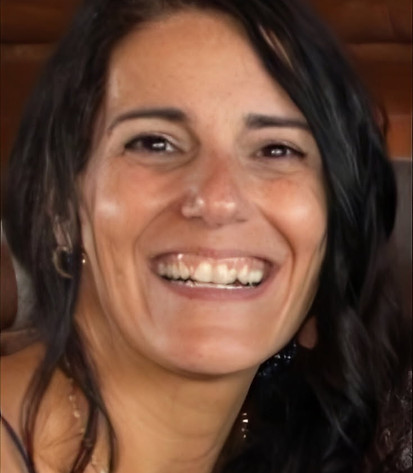
Anna Carroll, MPH
Anna Carroll is a somatic psychedelic facilitator and educator whose work is grounded in nervous system regulation and the relational realities that shape transformational experiences. She brings a trauma-informed approach to supporting people in remaining intact through periods of personal and relational change.
Her background includes a decade as a health system strategist with the Department of Defense, along with lived experience navigating the demands of high-intensity environments. Her training includes somatic psychedelic facilitation and integrative psychedelic studies through Psychedelics Today, as well as body-based practices that support resilience and embodied awareness.
Facilitator
Trish Gardner
Trish Gardner is a Trauma Informed Holistic Health & Life Coach and TIMBo facilitator who facilitates profound personal transformation. Her practice is grounded in the restorative power of nature and the body’s capacity to heal, fostering a deep connection between individuals and their environment. By applying a profoundly embodied and heart-centered methodology, Trish guides clients through transformative experiences focused on inner connection, holistic well-being, and empowered living. Her expertise is dedicated to supporting a journey of healing and self-discovery, ensuring impactful outcomes that allow individuals to navigate challenges with resilience and embrace a more fulfilling and meaningful life.
"There's so much I can say about this experience but the most profound thing I've been experiencing since my journey is the feeling of safety and space in my body. Without this journey I'm not sure I could of gotten to this point."
"The entire team held me so safely that I could finally let myself feel everything — including the forgiveness for my mother I had been carrying for 40 years. The women I shared that journey with are mine forever; same path, different stories, one bond that I will cherish for the rest of my life."
"The entire experience was nourishing—from the food and intentional flow to the integration that followed. Held with care, safety, and reverence in a women’s space, it was truly life-changing—I will never be the same."
This was a powerful retreat experience. I had two very different journeys; but I am realizing that the two journeys together are important to my healing. I am truly grateful for Sue, Jude, and the others who supported us during this five day adventure. Would 100% recommend.
Frequently Asked Questions
Why is the 6-week preparation required?
Psychedelic experiences tend to amplify what is already present in the nervous system. Rather than relying on the medicine to create safety or insight, we focus first on helping the body learn how to recognize activation and come back from it.
The six weeks of preparation allow you to build internal and relational resources, become familiar with the practices we’ll use during the retreat, and develop trust within the group. Many participants find this preparation period to be as meaningful as the retreat itself.
What happens if I miss a preparation session?
Because the preparation work builds week to week and supports group cohesion, attendance is important. If you anticipate challenges with scheduling, we can talk together about whether this particular retreat is the right timing for you.
Our intention is not to be rigid, but to protect the safety and integrity of the group.
Why is this a women-only retreat?
This retreat is offered as a women-only container to support a sense of safety, ease, and relational attunement that can be harder to access in mixed-gender settings. Many women find that their nervous systems soften more readily in this context, allowing for deeper rest and inner listening.
Do I need prior experience with psychedelic medicine?
Prior experience is not required. What matters more than experience is a willingness to engage in preparation, to move slowly, and to stay curious about your inner experience.
This retreat is not about intensity or peak experiences — it is about coherence, integration, and relationship with self.
What if I feel anxious or uncertain about the medicine?
Anxiety and uncertainty are welcome here. These responses often carry important information, and we work with them gently rather than trying to eliminate them.
The preparation process is designed to help you learn how to stay connected to yourself even when fear or doubt is present. You will never be asked to override your body’s signals or push beyond your capacity.
Will there be pressure to share personal experiences?
No. Sharing is always by choice.
While group connection is an important part of the retreat, there is no expectation to disclose personal material or describe your medicine experiences. Listening is as valued as speaking, and privacy is respected.
How structured is the retreat?
The retreat has a gentle, supportive structure that provides rhythm without rigidity. There is ample time for rest, reflection, and integration. This is not a packed schedule, and there is no expectation to participate in every activity.
We prioritize listening to the body and honoring individual pacing.
What kind of support is available during the retreat?
The retreat is held within a trauma-informed framework that emphasizes consent, choice, and nervous-system awareness. Support is available throughout the retreat, and participants are encouraged to ask for what they need.
What does integration look like after the retreat?
Integration continues through 4 online group sessions following the retreat, using the TIMBo framework. These sessions support participants in making sense of their experiences, staying connected to their bodies, and integrating insights into daily life and relationships.
Is this retreat right for me?
This retreat may be a good fit if you are looking for a slow, relational, and deeply respectful approach to psychedelic work and are willing to engage fully in preparation and integration.
If you are unsure, we can talk together to explore whether this retreat — or a different form of support — feels aligned at this time.


